

Sport Needs a Voice. Not Just a Voice Model.
AI audio offers sport a new production tool. The harder brief is deciding what to translate, what to automate and whose voice should never become an unlimited asset.
DUĒLL Journal ·

Filip Szyller / Pexels — Pexels License
A club can translate its words without translating its character. An athlete can sound fluent in another language without ever having spoken it. These are creative possibilities, but they also pose an editorial question: when technology can manufacture the delivery, who remains responsible for the meaning? For sport, the useful conversation about AI audio should start there. Not with how much content a voice model can produce. With what deserves to be said, who authorises it and whether the audience understands what it is hearing.
A sales role is a signal, not a case study
An ElevenLabs listing for an enterprise account executive specialising in sports offers a narrow but revealing signal. The company is recruiting specifically for the sector. Its company description presents three platforms spanning conversational agents, creative production and developer access to AI audio models. It describes ElevenCreative as supporting generation and editing across speech, music, image and video in more than 70 languages.
That is evidence of a supplier targeting a market. It is not evidence that clubs have adopted the technology, that supporters want synthetic commentary or that AI audio improves commercial results. The distinction matters. A product capability is not a cultural mandate.
Still, the listing gives sports organisations a concrete reason to prepare a brief. If AI audio is being sold into sport, buyers should decide what good use looks like before a demonstration decides it for them. The opportunity is worth examining. So are the boundaries.
The first question should be practical: which communication problem needs solving? Translating approved event information is a different task from generating an athlete endorsement. Both involve speech. They should not involve the same approval process.
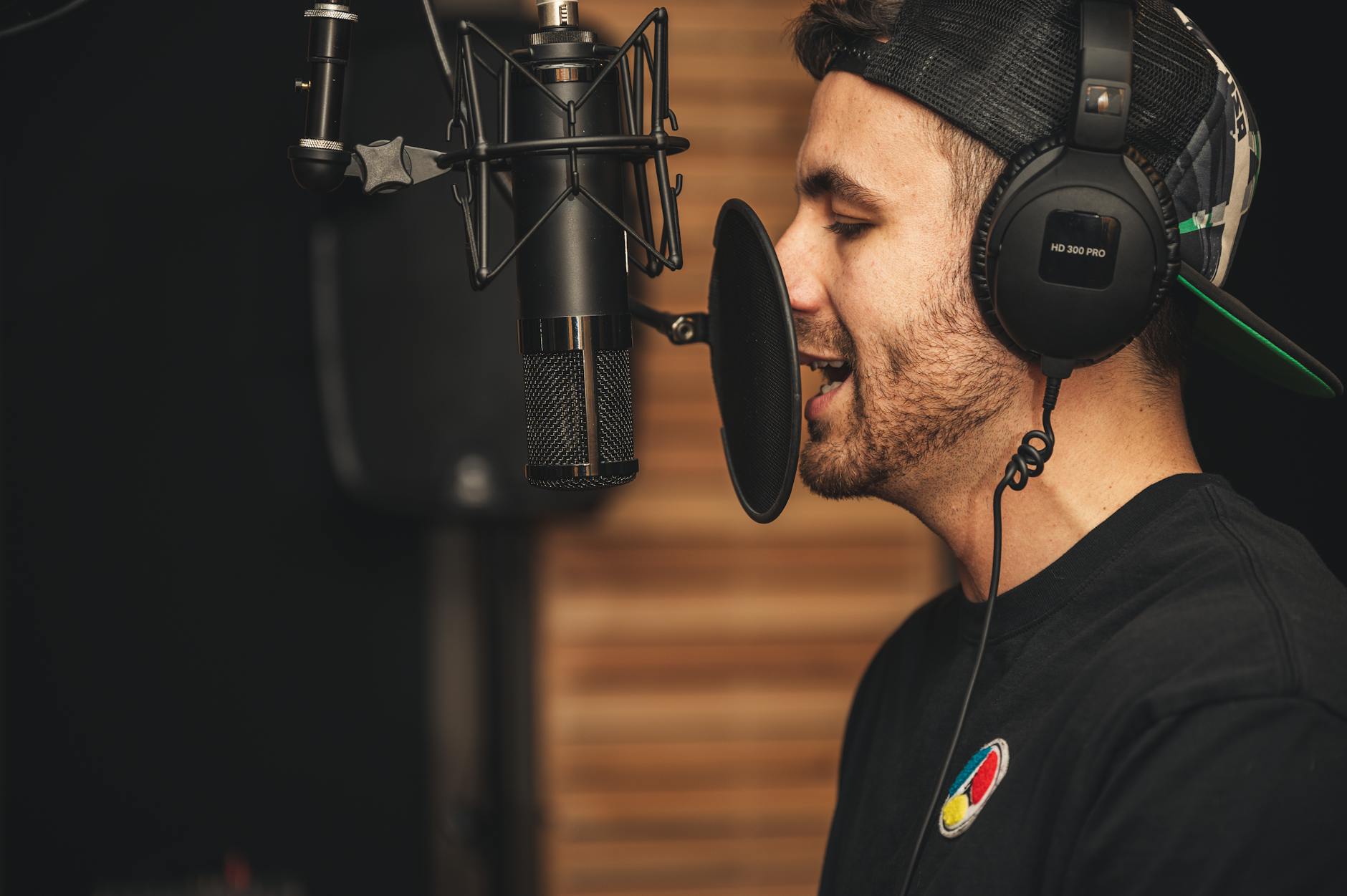
Brett Sayles / Pexels — Pexels License
Translate the information. Protect the character.
Consider a proposed multilingual event guide: arrival instructions, session schedules, explanations of how to participate. This would be a sensible place to test AI audio because the purpose is explicit and the script can be checked against approved information. Success should mean that someone understands what to do, not merely that the recording sounds convincing.
An athlete interview presents a different brief. A translated version should preserve the speaker’s meaning, with review by someone competent in the destination language. Names, sporting terminology, humour and uncertainty deserve particular attention. A polished sentence should not become a stronger claim than the original.
Brands asking how to use athletes as ambassadors with AI should begin with this principle: extend access to approved expression, not the apparent supply of personal conviction. A technology-assisted translation of an agreed message is one proposal. Making a recognisable voice deliver new promotional lines is another. Treat them separately.
At DUĒLL, we see the useful starting point as editorial responsibility: professionals, athletes and community representatives should help define the communication before a production tool defines its format. The voice should serve the relationship, not substitute for it.
The right to reproduce a voice should never be mistaken for permission to invent a point of view.
Build the approval process before the audio
A responsible pilot needs more than a clean recording. Its brief should specify the speaker, script, languages, channels, intended audience and duration of use. It should also identify who can approve revisions and who can stop distribution. These are proposed operating standards, not claims about what any particular supplier currently guarantees.
For an athlete’s synthetic voice, permission should be specific rather than assumed. Ask whether approval covers translation only, newly written speech or both. Define whether commercial messages are permitted and whether a separate brand partner can reuse the output. Establish what happens to generated material when the relationship ends.
Disclosure belongs in the creative brief too. Audiences should be able to distinguish an original recording from an AI-assisted translation or synthetic delivery. The label should explain the relevant intervention plainly, rather than burying it beneath technical language.
Then test with people, not just headphones. Can listeners understand the information? Does the translation retain the intended meaning? Is the synthetic element clear? Can an error be corrected quickly across every published version? For community-facing communication, invite members to assess tone as well as accuracy. Their role should be to challenge the output, not simply provide a testimonial for the pilot.
What it means
For brands, AI audio should be commissioned against a defined communication need, with message approval kept separate from production approval. A convincing voice is not proof of a credible endorsement.
For clubs and event organisers, start with bounded, verifiable information. Measure comprehension, correction workload and usefulness before expanding into more expressive formats. Keep an identifiable human owner responsible for every published version.
For athletes, treat voice permissions as a distinct part of the commercial brief. Agree what can be generated, where it can appear and how approval can be withdrawn before recording or modelling begins.
For communities, ask for a meaningful role in testing language and tone. The business opportunity is not simply more speech at lower production effort. It is communication that reaches further without making responsibility harder to locate. That is a better innovation brief than asking a machine to sound like someone people already trust.
More from the Journal

Innovation · 4 November 2026
Padel Innovation Needs a Price After Free
A college padel launch promises funded court access. Spanish club estimates show why someone still has to carry the cost. The innovation question is what happens when the subsidy ends.
Innovation · 23 October 2026
Sport’s AI Needs an Owner. Not Another Demo.
The less glamorous question in sports AI is the one that matters: who owns the work? A clear budget, a named decision-maker and a useful test should come before the launch announcement.
Innovation · 11 October 2026
Sport’s Next Creative Brief Is Infrastructure
Cloud production sounds like a technical conversation. It is also a question of editorial power: who can find, shape and publish the moments that give sport its meaning?